Sciaticyl Ingredients: What's Inside the Formula?
Last Updated: November 2026 | Published: November 2026
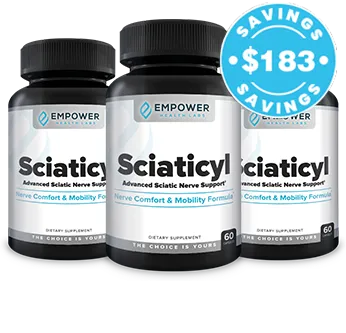
Table of Contents
What Is Inside Sciaticyl?
Sciaticyl is a capsule dietary supplement marketed to US adults who want to support sciatic nerve comfort and mobility. According to the Sciaticyl official website, the formula combines 11 ingredients: three B vitamins, two minerals, two amino acid derivatives, an antioxidant and three plant ingredients. This page explains each one, what the manufacturer says it does and how strong the published research really is. The Sciaticyl benefits page covers what users may expect, and our Sciaticyl reviews page covers feedback.
What Does the Ingredient Summary Table Show?
The table lists each Sciaticyl ingredient, the role the manufacturer claims for it and a plain-language evidence level. Evidence levels are our editorial reading of the references below.
| Ingredient | Claimed Role (Manufacturer) | Evidence Level |
|---|---|---|
| Thiamine (B1) | Nerve signal transmission | Limited: review, mostly animal |
| Vitamin B6 | Nerve fiber health | Mixed: high intake caution |
| Vitamin B12 | Myelin sheath maintenance | Limited to moderate: reviews |
| Magnesium | Nerve health, muscle relaxation | No reliable reference found |
| Zinc | Antioxidant, nerve sensitivity | No reliable reference found |
| N-Acetyl L-Cysteine | Oxidative stress support | Preliminary: rat study |
| N-Acetyl L-Carnitine | Nerve conduction support | Moderate in other neuropathy |
| Bacopa Monnieri | Healthy inflammation response | No sciatica reference found |
| Blueberry Extract | Antioxidant support | General: narrative review |
| Ginger Powder | Healthy inflammation response | General: narrative review |
| Alpha Lipoic Acid | Calm stress around nerves | Moderate in diabetic neuropathy |
Are the ingredients backed by clinical studies? Research exists on individual ingredients, mostly reviews, animal studies or other nerve conditions. We found no clinical trial of the finished Sciaticyl formula for sciatica.
What Are the Detailed Ingredient Profiles?
Each profile below states the manufacturer's claim, then the evidence we could verify, with its limits.
What Is Thiamine (Vitamin B1) and Why Is It Included?
According to the manufacturer, thiamine supports nerve signal transmission.
Sciaticyl includes thiamine as the first of three B vitamins aimed at nerve function. A 2021 review in BioMed Research International discusses neurotropic B vitamins, including thiamine, in nerve recovery, but it relies largely on animal studies. It does not show that thiamine in a capsule changes sciatic nerve comfort.
Thiamine is a water-soluble vitamin the body needs for normal nerve and energy function. If your diet already provides enough, extra thiamine may add little. Sciaticyl does not publish its thiamine amount, so you cannot compare it with a typical multivitamin.
What Does Vitamin B6 Do in Nerve Support?
The manufacturer says vitamin B6 supports nerve fiber health and helps protect nerve cells from oxidative stress.
Sciaticyl uses vitamin B6 as a nerve-support nutrient. A 2023 systematic review in Nutrients takes a balanced view: it links high B6 intake to peripheral neuropathy and offers no proof that B6 alone treats it. Because the amount in Sciaticyl is unpublished, check your total B6 from all supplements.
Most B6 research concerns neuropathy in general rather than sciatica. That is why it makes sense to review the B6 in any multivitamin or B-complex you already take before adding Sciaticyl, and to mention it to your healthcare professional.
Why Is Vitamin B12 Included?
According to the manufacturer, vitamin B12 helps maintain the myelin sheath, the protective coating around nerve fibers.
Sciaticyl supports nerve health with vitamin B12, which is the best-supported of the three B vitamins in the 2021 review. A 2013 paper in Neural Plasticity discusses methylcobalamin and pain. The B12 form used in Sciaticyl is not stated.
B12 status can vary with diet, age and some medications, so a blood test ordered by your healthcare professional is a better guide than guessing whether extra B12 fits you.
How Does Magnesium Support Nerve and Muscle Comfort?
The manufacturer lists magnesium for nerve health and muscle relaxation.
Sciaticyl adds magnesium as a mineral for nerve and muscle comfort, but we found no reliable reference tying magnesium to sciatic nerve comfort. For context, a 2017 trial in JAMA Internal Medicine found magnesium oxide did not beat placebo for nocturnal leg cramps. The magnesium form in Sciaticyl is not published.
Magnesium is an essential mineral involved in muscle and nerve function, so the claim is plausible in general terms. The gaps are sciatica-specific evidence and the amount per serving. If you have kidney concerns or take prescription medication, check with a professional first.
What Is Zinc's Role in Sciaticyl?
The manufacturer describes zinc as an antioxidant mineral that supports nerve sensitivity.
Sciaticyl includes zinc as a general antioxidant-support mineral. We found no reliable reference linking zinc supplements to sciatic nerve comfort, so treat this claim as unproven. Zinc is essential in small amounts, but more is not necessarily better, and without a published amount you cannot tell how it fits with your other supplements.
What Is N-Acetyl L-Cysteine (NAC)?
According to the manufacturer, NAC helps reduce oxidative stress linked to nerve compression.
Sciaticyl supports a healthy antioxidant balance with NAC. A 2016 study in the journal Pain found NAC attenuated neuropathic pain in rats by suppressing matrix metalloproteinases. Animal results like this are preliminary and do not predict what happens in people taking a capsule.
NAC is better known in other supplement categories, and its role here rests on the antioxidant idea. The manufacturer links it to nerve compression, a claim we could not verify in people.
What Is N-Acetyl L-Carnitine?
The manufacturer says N-Acetyl L-Carnitine supports nerve conduction. The official page also writes it as "Acetyl L-Carnitine (ALC)".
Sciaticyl uses N-Acetyl L-Carnitine as a nerve-energy ingredient. A 2019 systematic review in the Journal of Pain Research examined acetyl-L-carnitine in painful peripheral neuropathy, with its strongest findings in diabetic neuropathy. That is a different condition from sciatica.
Because the strongest evidence is in diabetic neuropathy, N-Acetyl L-Carnitine is plausible but unproven for sciatic nerve discomfort. The ingredient name differs across the official page, so confirm the exact wording on your bottle.
What Is Bacopa Monnieri Extract?
Sciaticyl includes bacopa monnieri extract as a plant ingredient for a healthy inflammation response. We found no reliable sciatica reference for bacopa; the human research we located looked at thinking and memory in older adults with mixed results.
Bacopa monnieri is a traditional herb sold mainly for cognition. Herbal extracts vary by plant part and extraction method, and Sciaticyl states neither. If you take prescription medication, ask a healthcare professional before adding it.
What Is Blueberry Extract?
According to the manufacturer, blueberry extract provides antioxidant and inflammation-related support.
Sciaticyl adds blueberry extract as a source of anthocyanins. A 2020 narrative review in Advances in Nutrition covers blueberries and their anthocyanins, and notes that more human evidence is needed. It is not about nerve comfort specifically.
Anthocyanins give blueberries their color and are the compounds studied most often. The amount and standardization of the extract in Sciaticyl are unknown, so any effect is hard to predict.
Why Is Ginger Powder Included?
The manufacturer describes ginger powder as anti-inflammatory and analgesic.
Sciaticyl supports a healthy inflammation response with ginger powder. A 2022 narrative review in Molecules summarizes ginger research on inflammatory diseases, with arthritis best supported. It does not test ginger for sciatic nerve discomfort.
Ginger is a familiar food ingredient with a long history of use. Ginger powder may cause stomach upset in some people, so take Sciaticyl as directed with water.
What Is Alpha Lipoic Acid?
According to the manufacturer, alpha lipoic acid helps reduce stress and inflammation around nerves.
Sciaticyl includes alpha lipoic acid as an antioxidant for nerve comfort. A 2012 meta-analysis in the International Journal of Endocrinology found benefit for diabetic neuropathy symptoms, but the positive result came from intravenous use. Whether capsules taken by mouth work the same way is unclear.
Alpha lipoic acid is among the better-studied ingredients in this formula in human trials, though in people with diabetes. Sciaticyl does not state its alpha lipoic acid amount, so those results cannot be mapped to a daily capsule.
Which Ingredient Supports Which Nerve Comfort Goal?
Matching ingredients to goals helps you judge whether Sciaticyl fits what you want from a nerve-support supplement.
Which Sciaticyl ingredients are aimed at nerve function? Thiamine, vitamin B6 and vitamin B12 are the B vitamins, with N-Acetyl L-Carnitine added for nerve conduction, according to the manufacturer.
Which ingredients are aimed at antioxidant support? Alpha lipoic acid, NAC, blueberry extract and zinc are the antioxidant-oriented ingredients in Sciaticyl.
Which ingredients are aimed at a healthy inflammation response? Ginger powder and bacopa monnieri extract fill that role in Sciaticyl, though only ginger has a reference in our list, and it is not about nerves.
How Do the Ingredients Work Together?
The manufacturer says the 11 ingredients work together to support the sciatic nerve; this is a design idea, not a tested result. In plain steps:
- B vitamins (B1, B6, B12) are the nutrients most associated with nerve function.
- Alpha lipoic acid, NAC and blueberry extract add antioxidant support.
- N-Acetyl L-Carnitine supports nerve energy and conduction.
- Ginger and bacopa target a healthy inflammation response.
- Magnesium and zinc round out the mineral side of the formula.
Why Combine B Vitamins With Antioxidants?
Sciaticyl pairs B vitamins with antioxidants because the manufacturer treats nerve comfort as both a nutrient question and an oxidative-stress question. The pairing is a reasonable design idea, but no study we found tests this exact combination in people with sciatica.
Are the Ingredients Natural or Synthetic?
The manufacturer describes Sciaticyl as an all-natural formula, yet the vitamin, amino acid and mineral forms are not specified. Natural sourcing does not by itself mean an ingredient is better absorbed or safer, so the bottle label is the best place to check.
What Safety Considerations Should You Know?
Sciaticyl is a dietary supplement, not a medication, and its safety depends on your health, medications and total intake of B vitamins and minerals.
Who should not take Sciaticyl? Anyone allergic to an ingredient should not use it. Pregnant or nursing women, children and people on prescription medication should ask a healthcare professional first. The official site itself suggests showing the bottle to your doctor.
Does Sciaticyl have side effects? Some online reviewers mention mild digestive upset, headache or fatigue, though these reports are not independently verified. Stop use and seek advice if you react, and get prompt medical care for sudden, severe or worsening symptoms. Sciaticyl does not replace medical care or medication.
Are Sciaticyl ingredients free from common allergens? The manufacturer says the formula is free from soy, gluten, milk, wheat, egg, GMOs, peanut and shellfish. These are the maker's claims, so read the bottle label.
Does Sciaticyl List Doses?
No. The official website pages we reviewed show ingredient names but no Supplement Facts panel, so the amount of each ingredient and its form were not published there.
How do you take Sciaticyl? The manufacturer's directions are two capsules daily with 6 to 8 ounces of water, or as directed by a healthcare professional. Check the bottle label or official checkout for exact amounts, and compare with the pricing and 90-day money-back guarantee on our official website guide. Without disclosed amounts, you cannot compare Sciaticyl with the levels used in clinical studies.
How Should You Read the Supplement Label?
When your bottle arrives, look for the Supplement Facts panel and compare its ingredient list with the 11 names above. Note the serving size, the amount of each nutrient, and any allergen statement. Share the label with your healthcare professional if you take other supplements or prescription medication.
What Scientific References Back These Ingredients?
These references study single ingredients, not Sciaticyl itself, and do not prove the product works.
- Baltrusch S. "The Role of Neurotropic B Vitamins in Nerve Regeneration." BioMed Research International. 2021.
- Muhamad R, et al. "The Role of Vitamin B6 in Peripheral Neuropathy: A Systematic Review." Nutrients. 2023;15(13):2823.
- Zhang M, Han W, Hu S, Xu H. "Methylcobalamin: a potential vitamin of pain killer." Neural Plasticity. 2013.
- Di Stefano G, et al. "Acetyl-L-carnitine in painful peripheral neuropathy: a systematic review." J Pain Res. 2019.
- Mijnhout GS, et al. "Alpha lipoic acid for symptomatic peripheral neuropathy in patients with diabetes: a meta-analysis of randomized controlled trials." Int J Endocrinol. 2012.
- Li J, et al. "N-acetyl-cysteine attenuates neuropathic pain by suppressing matrix metalloproteinases." Pain. 2016;157(8):1711-1723.
- Ballester P, et al. "Effect of Ginger on Inflammatory Diseases." Molecules. 2022;27(21):7223.
- Kalt W, et al. "Recent Research on the Health Benefits of Blueberries and Their Anthocyanins." Advances in Nutrition. 2020.
The information here is educational and not medical advice. Talk to a licensed healthcare professional before starting Sciaticyl. For the full picture, see our Sciaticyl supplement guide.
View Sciaticyl Pricing and the 90-Day Guarantee ›
Related Sciaticyl Resources
Continue exploring Sciaticyl with these pages.